Sunday, November 8, 2009
Our Choice Al Gore,


Sunday, November 1, 2009
Could shale change the fate of our energy supply
Natural gas is a really great alternative to some of the other available fossil fuels that we have out there. The fact that it's so much more clean than even coal helps the company that are producing it promote it and the development in other places. This might even lead us to use electricity in other places besides a power plant which is a main use of it today. If natural gas becomes as abundant as other fossil fuels such as oil, we all might eventually see natural gas cars on the road. This is also important because it serves as a less traumatic way of making the switch from the dirtiest fossil fuels strait to all clean energy. If we had an energy system that was more natural gas/ wind/ solar energy, we would be so much better off. We don't have to solve every problem with pure clean energy.
Lone Star, Meet Red Star: China’s $1.5 Billion Wind-Power Deal in Texas
The question of who pays for pollution is introduced when foreign companies, for instance China’s Shenyang Power Group, Cielo Wind Power, assemble power plants abroad. Chinese energy-related investments have begun to take place in Texas, where they are planning to install a $1.5 billion wind plant next year. Texas is already listed as the biggest wind-power state and with this new plant, their defeat over other states will continue to increase. Power leads to pollution, but whose responsibility is it? Chinese banks are funding the wind farm and supplying the components while Texas provides the land. Which element dominates; is the location more important or is the sponsor the responsible one? The producer may not even be accountable at all, the blame could be thrown onto the consumers of energy, therefore putting the weight of harming the economy evenly onto three groups, the supplier of sources & money, the producer of the pollution, and the consumer of electricity. I think countries should focus more on what emissions they’re putting out rather than concentrating on other countries’ rates of pollution. The article discusses the foreign competition to different sectors, proving that the entire world does contribute to global pollution, and therefore should all contribute to cleaning it back up.
Tuesday, October 27, 2009
Campaign Against Emissions Picks Number
The Earth is going to diminish slowly and we are obviously going to go down with it. There are many things that have been killing this planet, and carbon emissions is one form. Trees are important in reducing carbon emissions, yet many trees are being cut every day. I think people hesitate in making a sacrifice because they do not want to change their lifestyles. I do not understand why saving the environment would not be on every one's list of "Things to Do."
Monday, October 26, 2009
$105 million was ordered from Exxon to NYC
Commnets: This article reminded me aout the relationship between water and energy that Dr. Webber mentioned in his article. We always valued more about energy, since it might bring more profits in short term. But we mostly ignored the importance of water . We can't live without water, and there is no alternatives for that, but we can always invent alternative energy form. Specially, in this case, NYC is the most population intnesive area in the whole world, and rely mostly on underground water for its daily life. Pollution to the undergraoup water is extermely dangerous. So, I think those big oil company which have it all need think more about the side effects that energy exploring might bring, and think more about long-term effects. Moreover, we need to think the importance of water, and put that in the list of environmental protection, and maybe set an agency to control the water qualties.
Sunday, October 25, 2009
China’s Bright Solar Outlook
China’s new solar energy policy is very lofty proposing to increase its solar capacity from 50 megawatts in 2008 to 10 to 20 gigawatts in 2020. This increase would be about 20 or 40 times the solar capacity of the U.S. in 2008 (eia). This increase is to be accomplished through government subsidies for solar power plants and rooftop instillations. The program “Golden Sun” will subsidize 50% for on-grid plants, and 70% for off-grid power systems. This program should generate 500MW of power and lasts until 2011.
China’s solar policy should be good for many global companies and consumers. Companies such as First Solar, Solarfun, Canadian Solar Inc., and Trina Solar all have agreements to start building facilities. First Solar, which is an Arizona based company, has an agreement to build a 2GW plant in Ordos City, which should be one of the largest in the world. This would probably be like The Three Gorges Dam of solar plants a.k.a. huge! This 2GW plant will not even be completed until 2019. Solarfun, a Chinese company, also has a contract to build 2 plants that will total 600MW of power for the city of Hohhot. Canadian Solar Inc. has a contract to build a 500MW plant for the city of Baotau. Trina Solar also has plans to increase its plant by 500MW.
This is all being done by solar companies because of China’s availability of capital and lower prices of polysilicon, which is the raw material to make thin-film solar cells. This is all a play by China to make Solar power technologies economical for production. Solarfun and Trina Solar are good examples of this. Solarfun has taken out a 56.8 million dollar loan to increase its capital for its 600MW plants. Trina Solar has taken out a 304 million dollar loan to increase its capital to fund its expansion of 500MW.
These loans and expansions of power and solar technologies should come back to benefit the consumer. The increased use of capital should help start the flow of money again and help us out of our current recession. The increased renewable energy capacity will help China reach its desired solar energy capacity and supply power to more of its cities. This is also helpful for the U.S. in order to see how the production of these solar plants function economically and efficiently before we construct more of our own. Finally the most important thing is to see if China can meet more of its energy demands with more solar and less with its coal plants!
(The lithium part of the article, which I am not commenting on, but will be very important for the next generation of batteries for electric cars, and storage of large amounts of power from utility scale wind or solar plants.)
Sources
U.S. Electric Net Summer Capacity. EIA, 01 July 2009. Web. 25 Oct. 2009.
Iowa Lakes Community College: Partnership for Academic and Economic Success in a Rapidly Evolving Wind-Energy Industry
Converting Carbon Chains Into Ethanol
Oil Industry Sets a Brisk Pace of New Discoveries
Summary: Even though oil is harder to find nowadays, it is possible thanks to the technology that keeps on improving. This year, more than 200 oil discoveries have been made by big and small oil companies. This brings excitement for the industry as well as anxiety because of the fear that lower prices might injure the exploration. Companies are trying to keep up with the exploration while trying to reduce the costs. Thanks to this exploration drive companies have also found natural gas reserves and one of them could be Venezuela’s largest natural gas field.
Comment: We know that we need oil and people believe that there’s still a lot in the ground but it’s very expensive to explore and extract. It is reasonable that companies will explore more when the prices are high and that they won’t when the exploration is not worth the price. So, maybe there’s more oil left than we think, and the day when the price is high enough to explore the most difficult places will come.
Wednesday, October 21, 2009
California Tries to Solve Water Woes
In this case we do not need to look very far to find one of those problems, right here in the state of California. It should be a reason to worry about, but as usual it is turning into political stuff, the typical argument between Republicans and Democrats, but in this case both supporting the same goal, to solve the problem about the water supply.
The main idea is to repair the state’s fragile water ecosystem, to unleash new water supplies and to increase water conservation throughout the state. More specifically, negotiators hope to seal a deal that would make equal the goals of restoring the Sacramento-San Joaquin River Delta ( a collection of channels, natural habitats and islands at the confluence of the Sacramento and San Joaquin Rivers that is a major source of the state’s drinking water) and increasing the supply of water to residents, businesses and farms. Being the first one the largest environmental restoration project ever in the United States.
The discussion over how to distribute the water in California is decades old, but when it comes to water legislation, close to done never means done. There are many consequences cause of this problem with water, like water restrictions and increased prices for water, a federal order last year forcing water authorities to curtail the use of large pumps in the Sacramento-San Joaquin Delta to help preserve dying smelt has reduced water flows to agriculture, environmental problems in the Sacramento River have resulted in a collapse of the Chinook salmon population…
Of course there are some proposals to fix this. The construction of at least one dam is included in the plan, as well as a peripheral canal that would transport water from the Sacramento River around the delta to federal and state aqueducts for use in urban and agricultural areas.
One thing is clear, without water we can’t live. It’s necessary for us to survive, it’s a resource of energy we use continuously and it’s part of the nature where we live. It’s time to fix the damage we have caused during ages.
Sunday, October 18, 2009
Too Fast Too Furious: Climate Change
The article, Energy Firms Deeply Split on Bill to Battle Climate Change by John Broder and Jad Mouawad, goes on to talk about how since it has become a war of everyone against everyone there have been bought protests and advertising campaigns thrown around the battle field. One comment that caught my attention was concerning lobbing and how energy producers have literally thrown money into such efforts. The comment more than anything gave a comical take on the situation of how desperately this was happening, “The fact that the lobbying is so fast and so furious is a positive sign that this thing is moving along,” said Mark Brownstein, a managing director at the Environmental Defense Fund and an advocate of climate legislation. “The fact that everyone is rushing to Washington tells you people believe it is real.” The war is far from over it goes from coal to natural gas, to congress from fake advertising, and well the list is endless but most exhausting to maintain.
I see all of this as just pointless; I do not necessarily mean that we should not concentrate on saving our environment but this fiasco just seems over rated. There is never a moment in which what was agreed upon is later respected let alone acknowledged. Well those in senate all I can say is beat of luck, because seems to me that you must deal with a four year old throwing a temper tantrum.
Renewable Energy Powerhouse
As Congress considers ways to make America greener, these two states will serve as laboratories according to the policy makers under the Obama administration. Texas has loads of land and loose regulation, which makes it easy to build a wind turbine farm. California on the other hand does not have much extra space, which is why they turned to solar power. Although it may cost more money, it does not take up any land if they build the panels on the rooftops of buildings.
However, the one thing that both states have in common is that each has a renewable electricity mandates, stating that a certain amount of their electricity come from a renewable source. Congress is now considering on making such a mandate for the nation as a whole. As of now, renewable energy only accounts for 9.5 percent of the nation's supply of energy. Congress hopes that better technology will be developed soon so that the percentage will rise.
I believe that many other states will begin to follow in California's footsteps in solar power because it is a sure bet unlike wind power. Seeing as a majority of the states are not as big as California or Texas, they should take advantage of their building's rooftops and such. Also, as the concern for the environment rises, the creation of these energy mandates should satisfy many environmentalists.
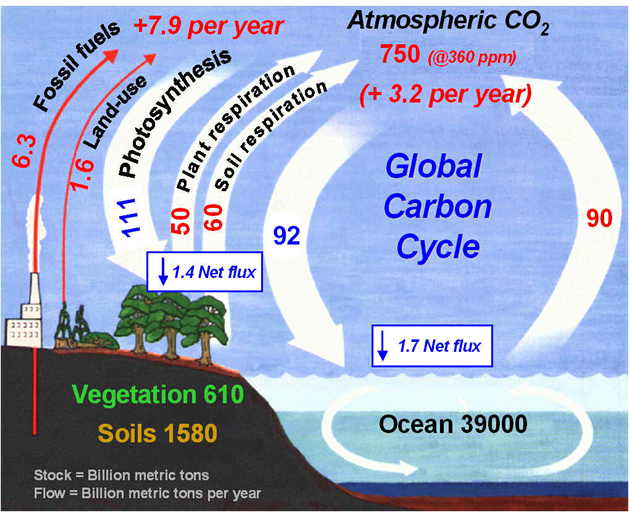
Marine plant life holds the secret to preventing global warming
Thursday, October 15, 2009
Wind offshore in the east...why not the west?
So why is there little interest in western states such as California in obtaining energy from its strong off shore winds? One answer is its topography offshore. Unlike eastern states which have a fairly continuous continental shelf on which turbines can be anchored, the west coast has a sudden shear drop to depths that do not allow turbines to be anchored with today's technology at an economic rate. Another reason is that California has large tracts of land that is recently being developed to obtain wind energy with less expense. With plenty of land to last them economically there is no need at the time to develop offshore wind systems. Power prices as well are cheaper than those in states such as New England and therefore there is little incentive to dump large amounts of money into new technologies as offshore wind when they are already stable. These technologies would have to deal with such things as the tremendous depths that the wind turbines would have to be anchored as well as earthquakes which the area is prone to. Other concerns in developing this technology include the high price for the research and engineering as well as maintenance.
From these reasons I believe it an understandable position of western states to resist the drive toward offshore wind power to some degree. I see it as beneficial however for small divisions of field research to develop basic groundwork. The potential for states such as California to establish this technology to produce electricity will come as a gain as it can produce enough for itself and for other grid systems in the long run. And as in the case of Texas which is proving to be a founder in the innovations of solar and nuclear plants California can also prove to be a key to such technologies as offshore wind technologies and gain world attention.
Citation: Galbraith, Kate. "Prospects Distant for Offshore Wind in West - Green Inc. Blog - NYTimes.com." Energy and Green Business - Green Inc. Blog - NYTimes.com. 09 Oct. 2009. Web. 15 Oct. 2009.
Wednesday, October 14, 2009
Solar Living, Without Compromising on Lifestyle
I like the fact that this competition exists because it gives students a chance to showcase their skills but also their great ideas. One will never know if any of these students will come up with an invention or idea that we will be using in the future. With success, these students can prove that there is a way to live a "green" life in your own home.